
Mayor Emma Mulvaney-Stanak
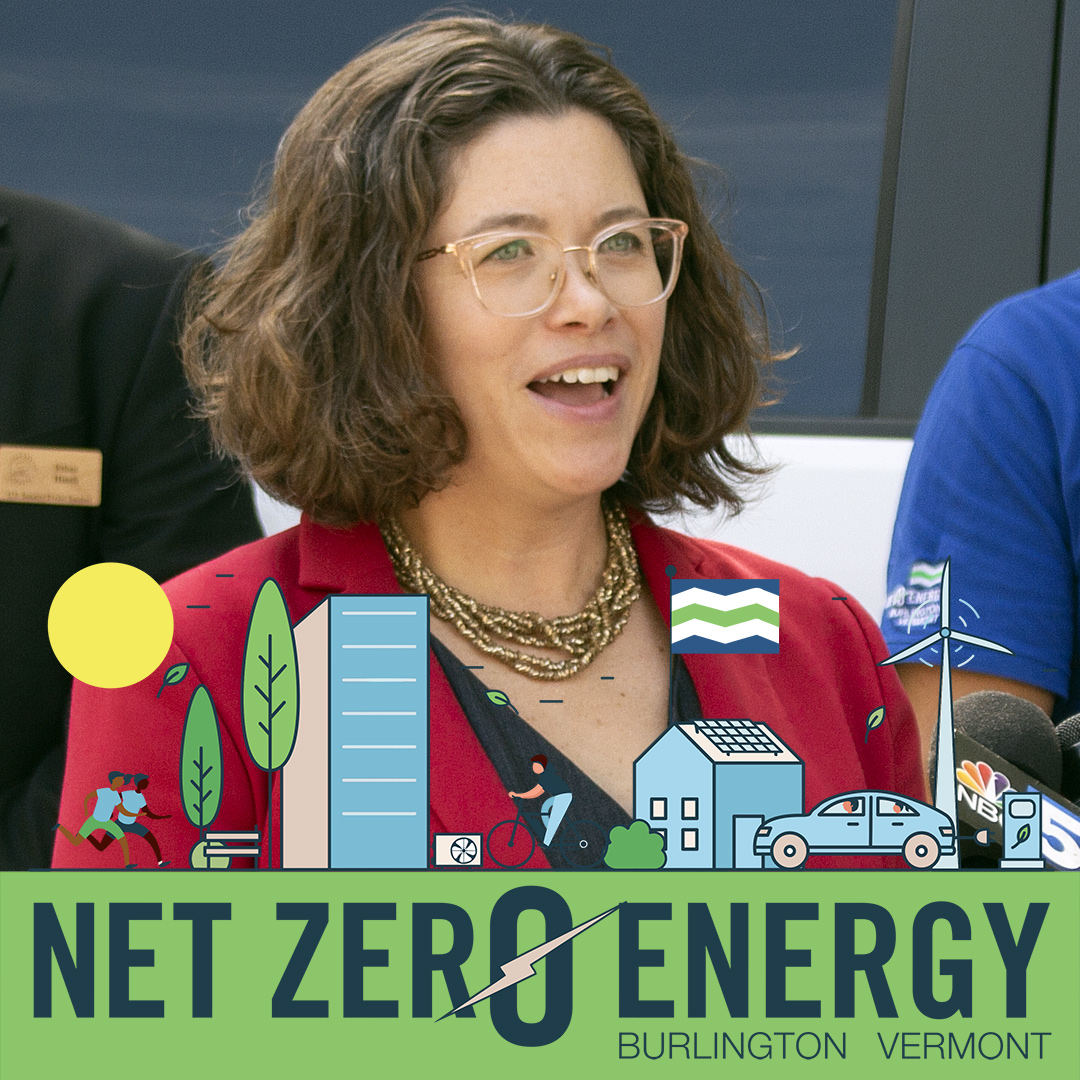
Burlington Mayor Emma Mulvaney-Stanak joins the Net Zero Energy podcast to discuss the city’s critical climate resilience and adaptation strategies. Discover how municipal departments are breaking down silos to integrate equity, affordable green infrastructure, and ecological solutions into future planning. Learn about exciting updates regarding wastewater phosphorus removal, public EV charging, and a responsible local energy transition. This landmark 100th episode offers residents an incredibly transparent look at building a sustainable, healthy, and resilient Burlington community for every single neighbor.

/
Burlington Mayor Emma Mulvaney-Stanak joins the Net Zero Energy podcast to discuss the city’s critical climate resilience and adaptation strategies. Discover how municipal departments are breaking down silos to integrate equity, affordable green infrastructure, and ecological solutions into future planning. Learn about exciting updates regarding wastewater phosphorus removal, public EV charging, and a responsible local energy transition. This landmark 100th episode offers residents an incredibly transparent look at building a sustainable, healthy, and resilient Burlington community for every single neighbor.
transcript
00:00 Jennifer Green: Hello, Burlington and welcome to Net Zero Energy. I’m Jennifer Green, director of sustainability for the City of Burlington, where our goal is to reduce and eventually eliminate fossil fuel usage. Today, we’re really thrilled. It’s our one hundredth episode and a special guest. We have Emma Mulvaney, Mayor Mulvaney-Stanak with us today. Mayor, it’s a pleasure to have you.
00:31 Mayor Mulvaney-Stanak: Thanks for having me, Jen. I’m excited to be here.
00:33 Jennifer Green: Well, you know, you’ve just wrapped up the climate advisory group. You come with some lived experience in the resiliency adaptation space. And I know, of course, climate was one of your three pillars followed by, you know, safety and housing. So I know this is on your mind and I know you have plans that you want to share.
00:52 Mayor Mulvaney-Stanak: Indeed. I’m so glad to have a more thorough and in-depth conversation around climate, because it is the third priority that I ran on in twenty twenty three into twenty twenty four, and it is such an important issue for the city of Burlington to not only embrace more deeply, but to get more into those conversations around what is a resilient city look like, and how do we adapt to the fact that climate change is right here? We’ve been a leader on climate for many years, especially at Burlington Electric Department, and there’s also quieter work happening across the city. So part of the endeavor of the advisors that was such a great community and city employee partnership was really unearthing some of the important climate work we’ve done across the city already and are currently doing, and then building upon that important work.
01:33 Jennifer Green: Yeah. And actually, I remember, Mayor, before the climate advisors kicked off, you had us compile a project inventory. So each city department added to the list of things that they’re doing that’s either climate related directly or adjacently. And it was really an impressive list. And again, you mentioned it’s quiet because I think there’s a lot going on behind the scenes that folks are not familiar with.
01:54 Mayor Mulvaney-Stanak: I found that document actually really rewarding. And for whatever—I’m not, I’m done being mayor when new city councilors come on, whenever those transitions happen for leaders in the city—I think that’s such an important resource so people understand our history. They can understand the why of certain departments of how to think about climate from the lens of the airport all the way to our parks, all the way to some more obvious ones like Burlington Electric or our water division. And for me, it really also was an important piece of understanding the comprehensive nature—really, unfortunately, in a lot of a siloed kind of way—that we were doing climate work. And one of the great beauties of this climate advisor work, and a lot of what we’ve been doing in my administration in general, is breaking down those silos so we can think more comprehensively across city departments on a regular basis, and we can start using things like in our comprehensive plan that we have just embarked upon for the city, which is through our planning department, but it’s envisioning what we want for the next twenty five years. And I would probably add to that not only what we want, but what we desperately need in the lens of climate and be able to have a climate lens through that work, because that comprehensive plan will bring together not only classic planning for how we want our city to grow and feel and be as we live here in the next twenty five years, but we’re integrating our parks sub project plan, our transportation plan, and new first time economic development plan. And to be able to do that with the three priorities, climate, as we’re talking about today, is going to be such an impactful way to think about designing our city.
03:23 Jennifer Green: Yes. And so for folks that don’t know, the comprehensive plan is legislatively required of us. Is that right? It’s a five-year, what we call sort of the municipal development plan in sort of city speak.
03:33 Mayor Mulvaney-Stanak: Correct. It’s been now long enough that I forget my legislative roots all along. Two and a half years it’s been but but it is required per state statute. I forget how many years it’s required, but every municipality must outline its planning goals and some certain baseline. And we’re taking it to the next level, though. And part of under director, the planning director, Charles Dillard’s leadership, doing that comprehensive planning is frankly not only more economical, but it’s just more strategic to be thinking as a full city with all the departments. I just rattled off a few areas, but you can imagine how many. It’s more than half of our departments are going to have a hand in this comprehensive plan, and that’s another exciting opportunity to have strategic lenses like climate, like housing, like community safety and how we think about our city.
04:16 Jennifer Green: Maybe I can back up for a minute and just mention how in our climate advisory group, we looked at several key sectors, including food, transportation, water, waste, etc. and we presented twenty-five various recommendations. While the comprehensive plan is important and forward-looking, was there anything from the Climate Advisor’s report that you want to tackle sooner rather than later?
04:39 Mayor Mulvaney-Stanak: Absolutely. One of the things I really appreciated, and Jen, I want to praise and appreciate you and also Grace O’Dell, for being the co-leaders of our climate advisory group. We had a couple dozen people. It was a combination of community members who work in various fields, be it at the Interval Center or at Katma or Green Mountain Transit. And then we had folks who were just community members who were bringing their own lived experiences as being activists in this space, or advocates or just users of systems that they want to be more pronounced in their city, like our bike ped network. And for me, it was also an opportunity, whenever possible, to make city and local government more accessible, to have people sitting down next to our city employee experts. And so I think the design was a smart one. And one of the things I asked climate advisors, though, to do very purposefully, is think about giving me recommendations that are very actionable, that are time certain in the sense that we can act upon these in the short term, because so much climate work is big and it feels bigger than a city could possibly do on its own. That feels really hard to make in a concrete kind of way. And certainly when you think about big seismic change living under this current federal administration in particular, it can feel impossible. So part of the accountability part was important lens that I wanted people to think about. What is something that you can give as recommendations that I can actually act upon as mayor in partnership with Council? And of course, also with an important lens of equity and affordability. We have had structural budget challenges, and I’m a big believer in your budget needs to reflect your values as a community. And we are working hard on that. But there’s also size, size and scope of what we can afford to take on big, sizable changes to make bigger impacts on climate. And it’s not that we just wait until things are easier financially. We have to kind of reshuffle and reprioritize things like our capital budget, for example. So the recommendations that came forward really, for the most part, fell into that. What is actionable in a more immediate sense? What is something that thinks about equity, like who are most impacted by climate change? Even here in Burlington? I think sometimes people can lose the thread a little bit because we are not as racially diverse as New York City, for example. But for sure, we have folks socioeconomically and racially who are more susceptible to the negative impacts of climate change, really from an economics lens, but also from a lens of just needing to sometimes even be climate refugees themselves, given what’s happening elsewhere in the planet and might be relocating to Burlington not due to even choice, but out of necessity, because other parts of the world are flooding, heating in ways that are just not livable. So we have to be prepared for that resilience side. The other thing I’ll just mention, because you mentioned this part, and I think this is why it’s so important to think about this as Vermonters. Not only is climate change right here, it is negatively impacting our state and has been for well over a decade. And it wasn’t just a one off Tropical Storm Irene kind of moment. I think we all woke up quickly to how big storm changes like that, the patterns of which can destroy communities, can destroy connectivity of the city. It can really have a long lasting negative impact on our state. And we were very much ill prepared with our infrastructure. If you think about how many critical roadways were just cut off for months, if not years, crisscrossing across the state. But I think about more recently, my hometown of Barre City has been flooded not once, but two summers, back to back and back to equity in that lens, the part of that community that was most negatively impacted was the lower socioeconomic community, places where working families have put their livelihoods into homes that were right in basically the floodplain, right next to a what was usually a pretty small, quiet river that just wiped out people’s entire livelihoods. Their entire retirement was in those buildings that got wiped away. And my parents still live in Barre, thankfully, up on a hill. But as they told me, even water was coming, groundwater was coming out of the hills and landsliding downhill. So it’s not as if this is just a who lives in the valley near a river moment. Burlington needs to be keeping this in mind as we think about how our climate is changing, how we’re vulnerable in multiple ways, how we have to think about where we place infrastructure going forward, even thinking about city buildings and their resilience. So much of utility work, for example, sits in basements. And how do we think about going forward? Again, back to the bigger planning. How do we think about protecting our city assets and adapting to the reality for which we’re living in while we also work on our negative—the reason why we are even in this place.
09:11 Jennifer Green: Yes. And you do mention BED and parks. I want to shout out to parks in particular for their work on nature-based solutions, because when you do talk about resiliency and adaptation, it seems like so much of that is rooted literally and figuratively in our green space, green infrastructure and the capability of that green infrastructure to support more rain, even more heat.
09:34 Mayor Mulvaney-Stanak: Well, and also thinking about just how we have made policy decisions that have not thought about their full ecosystem, right? So, for example, invasive species and how we make policy decisions that either plan for or don’t plan for those factors. And so we’ve been struggling with the emerald ash borer insect who’s come and started to infect a lot of the trees that were planted by the city. And so thinking about native species and what can be resilient just through nature-based solutions, as you said, is a really important shift the city has started to do. And it can feel weird, right, to community members to think about removal of trees, for example, or removal of other plants. But we have to think about the health and well-being of our ecosystems and the negative impact that will have on the larger food chain, as well as just our ecosystem in general, without thinking about that better strategic policymaking. And one of the things under park’s leadership and within our city arborist is diversifying our tree population, right? And not just planting one line of trees up and down, which was sort of the standard practice forty, fifty years ago. Not only does the lack of diversity in the ecosystem have a negative impact, but when things like this evolve in terms of invasive species, it can have a huge detrimental impact on tree canopy. And then you think about, again, impacts on neighborhoods and livability of communities. So everything you think about really is policy-wise, can have a climate lens and can also have both a positive or a negative outcome when we think about how we are adapting or we’re not adapting today.
11:05 Jennifer Green: Yeah. So given that, how are your department heads thinking about climate in their work? I mean, you talk about it as being sort of cross-sectoral and every department having a role to play and policy impacting climate. Can you talk about your relationship with your department heads and sort of bringing them along into that space?
11:22 Mayor Mulvaney-Stanak: Yes. Of course. So back in the spirit of really working comprehensively across all city departments, I have really challenged department heads with those three priorities around climate, around housing, and also community safety, to think about how that reflects in their department annual goals. So every summer, when it gets a tiny bit quieter in the city, we sit down and we really plan for the next year ahead. And we look back a year to say, how have we done in terms of advancing the goals? And so one good example is the airport for just as one to call out. Under the leadership of director Nick Longo, they have great opportunities there. One of our better resource departments, because they’re an enterprise fund, gets most of their resourcing from the federal government. So folks understand local government one hundred and one finances, so challenging. Challenged Nick and his team to really think about how do we move the needle here? Because until for the next bit here, we are not going to research necessarily see a bunch of electric planes yet for commercial airlines, right? Soon BETA and others will bring things online, hopefully. But in the meantime, how can we think about the footprint of the airport itself? We just added a new terminal which is allowing us to have that be a completely green terminal in terms of its cooling and heating from geothermal wells and other strategies at the airport, but also on the big equipment that they operate. How do we find what is available to be able to electrify that large fleet? These are big snow removing vehicles that run all winter long, as well as all the other smaller fleet that they have on site. There’s a lot of opportunities to make impact, and through that work—I won’t remember the name of the agency that does the accreditation—but they’ve been able to achieve some climate certificates of really moving the needle as an airport. And now we’re moving ourselves into being a leader in the region on how we think about leveraging our airport for what part they can do.
13:10 Jennifer Green: I believe it’s the carbon accreditation program. So if folks are curious, they should look at the airport website because I bet it’s listed.
13:17 Mayor Mulvaney-Stanak: I think another quick example to give is because I know taxpayers very generously supported two large bond investments in our water system, not this last March, but March of twenty twenty-five. And that is a big piece of our climate strategy when it comes to our impact on Lake Champlain, but also making sure that we have the resources for folks to have clean, regular and ongoing clean access to drinking water. It’s a two-part system, of course, what our wastewater does for the lake negatively, but also making sure that we can maintain our systems to pull in water from the lake, have it clean and usable and affordable for folks to access as our ratepayers. And in that bond that supports the wastewater system upgrades, we are moving our main plant and all of our plants—we have three wastewater treatment plants—to get to a place of removing all of the phosphorus that Burlington’s wastewater system creates out of its process before it hits the lake. That is a huge accomplishment when we think about all of the algae blooms and other negative impacts on the lake because of the amount of phosphorus that runs off of all of Vermont into our watershed and into the lake, eventually. That is what causes, in the heat of the summer, our inability to use and recreate in our lake, as well as all the negative impacts on nature and other wildlife, etc., who also are impacted. It’s not just humans when there’s an algae bloom. So I think for us, that’s going to be a huge feather in our cap moment to say we were able to not only move our resources back to make sure your money aligns with—or how you spend your money aligns with—your values, but being able to model for the state and other smaller communities a path for removing phosphorus in their own wastewater treatment systems as well around the state. So I’m excited for this big moment. It’s another great example of a tangible way Burlington is moving the needle on having a positive impact on our climate in multiple city departments.
15:07 Jennifer Green: I know myself as a Burlingtonian, as a city staffer, really appreciate thinking about the lake being accessible twenty-four seven, three hundred sixty-five, but until then, any plans?
15:17 Mayor Mulvaney-Stanak: One of the recommendations back to the climate advisors for a minute that I’m most excited about because it is talk about very tangible and very actionable, is looking into adding a new splash pad or something like that so that when the lake is closed, when people can’t swim at the beach, and due to economics, due to inability to have a car, inability to have the money to be a member at a country club somewhere that has a private pool or a lake house somewhere else. Right? We’re going to be accelerating, reprioritizing our list of capital investments to put a splash pad somewhere in the city, most likely using an equity lens, probably in the Old North End, because we want to make sure it’s usable and walkable for folks who are lower income. And that tends to be our most racially and economically diverse neighborhood. But it allows people an alternative for cooling. And it also is an opportunity for us to think about strategic partnerships with our city departments. Our water division is another enterprise fund, so they could bring some resources to the table. So it doesn’t necessarily have to only be from our capital fund, which is the money we have basically to support all city assets and upgrades and upkeep across the city. But I, as the mayor, said I think this should be a priority this coming year. So we’re going to start putting the design components together so hopefully within a couple of years we’ll be able to open up one, if not many in the future, but at least one new alternative for folks to be able to have a cooling option when the lake is unfortunately not open.
16:43 Jennifer Green: Mayor, I know, having been part of the Climate Advisory group, that one of the recommendations was transparency and availability of information, plans, policies, and initiatives. Can you talk a little bit about how we’re going to tackle that?
16:57 Mayor Mulvaney-Stanak: Well, sure. In the report, I not only did people give me concrete recommendations of actionable things the city could do, but also how we do climate work. And I really appreciated that. We’ve talked about the cross city and unifying efforts we should do. So it’s not just siloed in one or two departments, but there was great feedback on how do we think about keeping ourselves accountable as a community, and how do you stay accountable is not only setting those expectations either through goal setting with department heads, but having that really mean something, but also having that move deeper into each of the departments around everyone, collectively understanding what the metrics are and how do we move forward. The other side of that, though, for the public to be able to be engaged and help elected leaders as well as the city in general stay accountable to our goals for climate is to make sure we’re being transparent. So making sure we’re offering an easy way for residents to really track and understand how we’re reporting our progress on our advancement of our climate initiatives. And I think easy ways to think about that, especially in modern day, is making sure we have a unified spot where people could go on the city website, just as one pure example, and not have it be buried deep, deep pages and pages into our complex city website to just have an overview of our climate work and have it be a unified location that you can understand what each of those departments might be doing at a high level. And then you can go deeper if you want to go deeper, deep, deep into BED, for example, that’s doing so much great, but very complex and technical work. Or if you’re interested in nature-based solutions, you have a whole other path you could go and really explore what many of our strong partners on the conservation board and all of our land steward work have been doing for years, and maybe dive into our open space plan to understand a little bit of where we’re headed in the next several years, because the open space plan was just adopted by City Council earlier this calendar year, and it’s really such innovative and thoughtful solutions there with a strong climate lens around how we use our green space and think about not only maintaining what we have today, but how we make sure that livability is around all of our neighborhoods as the city continues to grow. And I think this is an opportunity for us to think about accessibility of information, using plain language, thinking about how that also literally translates into other languages or not, and how we as city government really get down to the core components and don’t overcomplicate for information that really should be accessible to everybody and understood by everybody about what is your city doing to not only adapt around climate, but continue to do our part of mitigating our impact?
19:22 Jennifer Green: So, Mayor, of course, in our list of twenty-five recommendations, some were very nascent and some were sort of starting to roll that just need a little more support and push from behind, one being the consolidated waste analysis which had been conducted, which will hopefully come to fruition. Do you want to talk about that?
19:40 Mayor Mulvaney-Stanak: Absolutely. Well, there are some bigger things that are obvious that we can’t not talk about when you talk about climate in Burlington. And one is how we make waste and collect waste and figure out more smarter ways that could be municipally run or municipally controlled, at least policy-wise around what we do as a city. And so we just went through a whole conversation this last winter around for operational purposes, why the city’s municipally run recycling program needed to transition to a private hauler to actually do the collection. We are still municipally controlled, though, in the sense of it’s per ordinance—nothing changed there. We as a city still choose the vendor or choose the hauler in this case to collect recycling. But we still have complete oversight of how that happens. What we are not able to do quite yet, which is what is named in the recommendations, is how do we get to a comprehensive consolidated waste collection system? Because now, unlike in the nineties, when we first started having a municipally run recycling system, we have compost, we have trash, obviously, and we have recycling. And how do we get Burlington to a place of, again, being a leader? In the nineties, we were actually a leader on recycling collection because it was not mandated yet by state. It was hard to find a hauler to come and pick up your recycling. And so it was a great leader moment in terms of that piece of climate work, but just waste, waste reduction to be able to offer that as a city. But now, and most cities are no longer municipally running the operations of it all because it is a hard business, if you will, to be in. But how do we get Burlington back to that innovative thinking of like what’s not available right now? And that’s smart consolidated waste collection. So how do we help everybody in an economically feasible way be able to access compost on a regular basis, especially renters, right? But also think about ways we can reduce our waste collection, meaning less going into the actual trash waste stream and thinking more about education and ease for people to recycle and compost, so what actually goes to landfill is the smallest of all three waste streams. That’s the work that Department of Public Works is now embarking on. After—this is part of our proposal to City Council—while we are going to get out of the technical operational work of running a recycling system right now until we can figure out what comes next. The coming next work is consolidating our waste streams. How do we propose something? What would that take? And then bring that back transparently again of what would it cost, how would we run such a system so that Burlington could make that decision again. Because if this is a major priority for the city, then we should shuffle our investments in other ways to be able to stand up this new system, but one that is really built upon sustainability in the sense of being able to run that well, but also being able to do that kind of equity lens I was mentioning before, so it’s accessible to everybody and not just something that is only available to people who have the resources to pay for a high-priced kind of waste consolidated pickup system. So that’s work to come. That’s not going to be in the next year, just to be clear. But this is work that we are starting to study. That is the actual step that we can take right now. I think the other big one, and it would feel weird not to talk about climate without talking about McNeil, because it is something that not only I talked about in my campaign for mayor, but I’ve been very committed to figuring out a path towards transitioning McNeil into something else. It has been a piece of our energy system, our way of keeping rates stable for many, many years here in the city of Burlington. And we have a lot of smart and dedicated thinkers who are trying to figure out what could alternatives look like for McNeil. And I want your listeners, our listeners, to really understand that this is not as easy as it sounds to just simply switch a switch and just shut it down completely without an actual plan, not only for the impacts it would have on our ratepayers, which are all of us, but also on the jobs, the individuals who operate the plant now, as well as just thinking about back to climate, the volatility of what our weather cycles look like. And when we think about all those factors together, it’s very important to have a responsible transition mapped out, so we’re guiding people and our electric department forward in a sustainable and responsible kind of way. I’m very excited that BED has already been deep into thinking about battery storage and how we can use either the campus—if that’s the right word—of McNeil as a location for some pilot opportunities to do battery storage, but also leveraging relationships we have with other large institutions who have land and ability to perhaps also be a host site for battery storage. Thinking about partners like UVM or UVM Medical Center who are high energy users, but starting those conversations or continuing those conversations are ways for us to be able to slowly be able to move away from the way that McNeil is structured right now, and that is very actionable and very reasonable for us to do in the short term.
24:27 Jennifer Green: Yeah, I appreciate you bringing that up. And I do want listeners to understand, as you mentioned, that it’s not a matter of simply flipping a switch, and that BED is one owner fifty percent, but we’ve got two other owners. Of course, we have a large role to play in the Vermont economy and in the integrity of our forests. McNeil helps to ensure that our forests are well managed and incentivizes landowners to keep their areas as forests and not to sell them off so they become, say, strip malls, for example. So it takes a lot of thought and consideration, and we’re committed to renewable. So we’ve got to be thinking about that. Of course, McNeil, whether you like McNeil or not, it is a renewable source. And if we’re going to replace it with a renewable source, it’s got to be cost-effective, technologically available, etc. Not an easy task, right?
25:15 Mayor Mulvaney-Stanak: And I also always want to remind folks, too, that Burlington Electric Department is a tiny utility in the larger world of utilities and energy producers and whatnot. And to think about how little we have in terms of options to pivot to quickly, we are not these large multinational entities that can quickly gobble up any of the offshore wind that might be developing. We’re going to be way low on that list to be able to get a piece of it, at least initially, but also thinking about other contracts that are available to us for wind or solar or, frankly, other things that I think policy and values-wise would not want to go near, for example, nuclear power. You will not see this mayor supporting that. It is something that Vermont in general has really grappled with for decades. And Vermont Yankee was shut down for a number of reasons. And I think it’s important for us to not roll back our values just for seeking perhaps slightly cheaper energy or going onto the big grid and losing our ability to control, again, with a values-based where our multiple contracts, diversified contracts are coming from, from renewable sources like water, solar, and, you know, McNeil at this point. We can always continue to strive to do better when other options come online that are better than what even McNeil can offer us. And that’s where I’m hoping to help lead forward with the partnership of Darren Springer, of course, because that is feasible for us to do in this—I’m going to say definitely in this lifetime, I hope I live a long time—but I also want to make sure that we are not defaulting again to a massive grid that we have no control over where that energy is coming from. Because back to this federal administration, it’s dark times, y’all, and the decisions and what is happening around coal and back to nuclear power, back to even AI and data centers—like just all the different things that are shifting—is really big stuff that we need to be thinking about so that we don’t lead Burlington, again, away from our core values.
27:05 Jennifer Green: As we think about McNeil, and we think about electrification and the importance of electrifying, we know that this is a key way that cities around the country are reducing fossil fuel use. And, as I said in other podcasts, I have the privilege of going to many meetings with sustainability folks around the country virtually and live through the Urban Sustainability Directors Network and other networks that I’m a part of. And Burlington is always seen as a leader in the strategic electrification front. For folks that don’t know and haven’t seen the Net Zero Energy roadmap update, you’ll be really happy to see the reduction in greenhouse gases that we’ve achieved since the beginning of our strategic electrification initiatives.
27:46 Mayor Mulvaney-Stanak: And one thing I’ll add, Jen, is that not only is it important on our Net Zero Energy roadmap, we’ve been able to sustain a reduction even after COVID. And COVID was, I think, an abnormality where people were not traveling as much, not using fossil fuels as much in various ways, but we’ve been able to continue to sustain because we’re continuing to make sure that electrification is accessible to more people. One very important piece in the last year-plus or so I’ve been proud of for the city of Burlington is when the federal government started to abandon any real commitment to climate—and by that, I mean pulling what used to be very reliable federal sources of funding from places like Burlington the city, but Burlington Electric Department in particular, to pass on to have actual savings for folks to be able to transition from a fossil fuel run car to an electric vehicle, or to be able to electrify how you heat those, as we very well know in Vermont. If folks don’t know, that is our two major levers that we have at this point is to change our reliance on fossil fuels to heat our homes and to fuel our cars, basically. And to do that work takes money. And not everybody has that disposable income to be able to put heat pumps into their homes or to even get a second-hand electric vehicle car or, even more than that, have a charging station somewhere near home or put it at their house specifically. But the great stuff BED has been doing in the last year is making sure that we found resources locally, so that we could continue to offer some amount of incentives for folks to be able to make those transitions based on either, again, vehicle or an alternative electrified heating option for their home. We’ve been even taking it steps further, which I really appreciate, around thinking about how do we get to those renters to make sure that they have access to, again, have more options for heating their apartments. And on top of that, I’ve really loved—there’s one in my neighborhood—making sure people have access to chargers for their EV vehicles, even if they don’t have the ability because maybe they don’t own their home or the landlord may not have the ability to put something into their apartment building, but publicly accessible on residential streets, charging stations. And it’s like living in Back to the Future—these things come down from the electric poles, you can plug in, and they go right back up again. It does feel like we live in Back to the Future, and I am that old so I remember that movie series. But it’s cool, and it’s important, and it’s real, and it’s right now, and it’s really making our neighborhoods—you can feel it in our neighborhoods, even. It’s not just a couple people on your street; it’s like we all are living around the infrastructure needed to make these better choices.
30:23 Jennifer Green: Right, Mayor, we’ve covered a lot in our time together. Is there anything else you want to leave listeners that we haven’t covered together?
30:30 Mayor Mulvaney-Stanak: Well, I’d love to just wrap up by commending you on one hundred episodes. I think this is your one hundredth episode. This is a remarkable—having doing something a hundred different times is just quite a feat anyway. But being able to do and break down in simple, plain ways, as we’ve talked about earlier, how to think about climate and how to think about the great work coming out of Burlington Electric Department, among many other partners, is quite a feat. So congratulations on that.
30:52 Jennifer Green: Well, thank you. And a big shout out to Adam Rabin, who is our producer and does an amazing job editing and pulling things together. I really appreciate Adam’s work. Well, on that note, thank you so much, Mayor. It was a pleasure to have you. We appreciate your work and we have your back when we think towards the future and the other exciting initiatives we’re going to advance.
31:09 Mayor Mulvaney-Stanak: Thanks again for having me, Jen.
31:14 Jennifer Green: Thank you again for listening to Net Zero Energy from Burlington Electric Department. If you have any questions about this show or what BED offers regarding rebates or technical support, look for us at burlingtonelectric.com or call us at 802-865-7300. We’re here to help you on our mutual path to Net Zero Energy.