
Multi-Lingual Video Library | Ita Meno
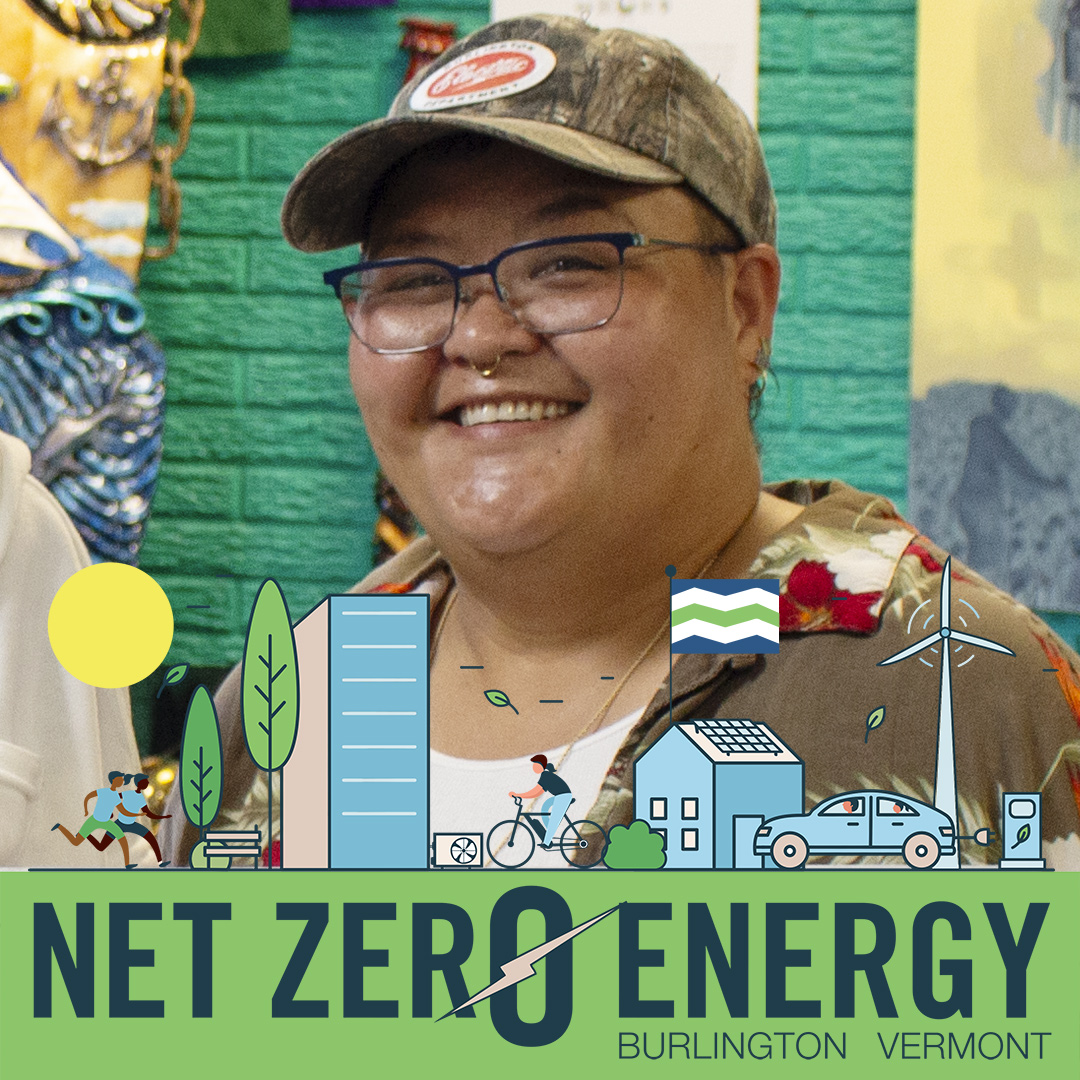
Burlington Electric Department Policy and Equity Analyst Ita Meno discusses an exciting new multi-lingual video library designed to demystify household energy decisions. Funded by an American Public Power Association DEED grant, this project translates crucial information on weatherization, efficient heating and cooling, electric appliances, and transportation alternatives into 18 different languages. Discover how these accessible resources help residents lower utility bills and maintain comfortable lifestyles without giving up modern conveniences.

/
Burlington Electric Department Policy and Equity Analyst Ita Meno discusses an exciting new multi-lingual video library designed to demystify household energy decisions. Funded by an American Public Power Association DEED grant, this project translates crucial information on weatherization, efficient heating and cooling, electric appliances, and transportation alternatives into 18 different languages. Discover how these accessible resources help residents lower utility bills and maintain comfortable lifestyles without giving up modern conveniences.
transcript
00:00 Jennifer Green: Hello, Burlington and welcome to Net Zero Energy. I’m Jennifer Green, director of sustainability for the City of Burlington, where our goal is to reduce and eventually eliminate fossil fuel usage. As always, it’s a pleasure to have you on the Net Zero Energy podcast.
00:26 Ita Meno: Hey, I’m so happy to be here.
00:29 Jennifer Green: For folks that don’t know, this is your second episode with us. And even more importantly, is the fact that I have the privilege of being your colleague. You are the policy and equity analyst at BED.
00:41 Ita Meno: Yes. I’ve been here for a little over three years now, and I came here from housing. I was a rental housing inspector for the City of Burlington. So I’ve been in 10,000 units in the city of Burlington. And I feel like this job has really allowed me to expand on the work that I did when I was over at Code Enforcement. I’m really glad to be here.
01:06 Jennifer Green: So no exaggeration. 10,000 units, no exaggeration. For real. Well, I mean, you have such a breadth of work. I think today’s episode, we want to focus on one project in particular that you’ve sort of masterminded from start to finish. It was with funding from the American Public Power Association, APPA, of which BED is a member as a municipal facility, and in particular, it was money from the DEED program, which is demonstration of energy and efficiency developments. So I’ll stop there and let you describe it.
01:39 Ita Meno: So we applied for this funding to kind of add some nuance and texture to the existing library that DEED has for residents. We know that in Vermont, there are over forty languages spoken in households. And in Burlington itself, around ten percent of households. The decision makers. So the adults in the house, the bill payers in the household, their primary language is something other than English. We want to be able to support all households in making the best possible decisions that they can, by giving folks information about how their homes work, about building science and about transportation. And we wanted to talk about building science without actually saying building science, because that just makes things so confusing already. So you use energy in your home all the time, even when you’re not thinking about it. And the only time we remember it is when we have to pay that bill. We want to be able to provide people with some information on how to reduce the size of that bill, how to reduce their energy use, how to maintain their quality of life without feeling like they’re sacrificing warmth, light and cooking and without sacrificing the things that have become convenient to them in their lifestyle.
We knew that creating a video library would work because we made a library about six months into 2023. I think about six months into 2023, we created a video that was translated into nine different languages about how to understand your energy bill, because folks were talking about the things that they did not understand about how electricity was being used in their home. And so, combining all of these questions together and figuring out what the answers were, we found that one simple solution to giving people answers was to outline what’s going on in this video. And three years later, we have seen that the highest number of views on this video has actually been in English. So even though the intent is to really provide all residents with an opportunity to understand what’s going on in their home with their electricity or their energy, we’ve found that it’s predominantly English language speakers that have been really using this video.
04:29 Jennifer Green: Yeah. So interesting. So it sounds like you started with one video, which was the how to read your energy bill. And then it was the DEED grant through the APPA that funded the other four videos?
04:41 Ita Meno: Yes. Four videos. The first video we created was about weatherization. Weatherization is such a funny word. It is not a word that is common in everyday language. So we needed to call it something different. And we decided to call it what it was, which is how to keep your home warm in winter and cool in summer, which is exactly what weatherization provides us the opportunity to do. So it’s this awesome seven-minute video about different movements that you can make in your home to keep it warm when you want it warm, and to keep it cool when you want it cool, which seasonally is a lot of the same thing.
05:30 Jennifer Green: Yeah. So interesting that we partner with VGS Vermont Gas Systems, in terms of content, but also funding. Why is VGS important for the weatherization?
05:40 Ita Meno: It’s specifically important in Burlington because most of our accounts, most of our households in Burlington use natural gas for heating. And so they’ve become an important partner for us whenever we’re talking about warmth in Vermont. But Vermont Gas isn’t our only partner. We also partnered with Efficiency Vermont because a lot of the work that they do is very similar to the work that we do and Vermont Gas does when we’re talking about how to best use existing appliances and how to identify appliances that could be used to upgrade the efficiency in your own home as well.
06:21 Jennifer Green: So that was number two. Video was one on appliances.
06:25 Ita Meno: That was our fourth video actually. Jen, you skipped a few.
06:28 Jennifer Green: Okay, tell us more.
06:29 Ita Meno: One was how to keep your home warm and cool. The second one was about how to use your heating and cooling in an efficient way. You know, I know I’ve been in a lot of households in Burlington, and I know that a lot of people in summer really like to keep their homes cool, but do you need to keep it at sixty degrees? I would say if you’re worried about money and you’re worried about the cost of electricity, the answer is absolutely not. Do you need to keep your air conditioner running if you’re going to be gone for eight to twelve hours? No. Absolutely not. I think that there are ways that you can set it. If you want to keep it running, you can set it higher so that you’re not terribly worried about it. But setting the temperature to sixty degrees is not a good idea, especially when we’re thinking about the rising cost of electricity—even though in Burlington it’s not rising as fast as it is in the rest of the country, it’s still something for us to think about. It still costs money.
07:25 Jennifer Green: Yeah, and I love this idea because although I know it’s a lot of folks that speak English that are watching these videos, we also know that there are a lot of folks who are new to the United States, new to this technology, and may not understand the correlation between having your air conditioner run all day when you’re not around and the bill that you have to pay.
07:43 Ita Meno: Yeah, absolutely. I remember growing up on Guam, I remember the first time my family got an air conditioner. It was in one room in the whole house. It was a window air conditioning unit. It was in one room, but it was the least air-conditioned wall. So there were no, you know, it was just cords. And then on the outside wall, there was no insulation. There was nothing. So the room was still hot. It still felt like hot beach sand in that room, but there was still an air conditioner running. I can only imagine how hot it was. I can’t even remember how hot it was without the air conditioner. So I think that we take for granted when you don’t have it, we take for granted what it means to have an opportunity to cool a space. But it’s important for us to think about how to do things better.
That’s why the weatherization video was the first video we released because that’s the most important thing. And I think that we did a pretty darn good job of it. And it looks sexy as heck. So I’m really excited about that. The third video that we did, so we did weatherization, we did heating and cooling, and then we did this really awesome video on alternatives to internal combustion engines, because we know that people in 2026 are not stationary. We’re constantly going places. We have families, we’re constantly on the move. Everybody has somewhere to go. So what are the things that we can do to get ourselves from point A to point B? So we developed this alternatives to internal combustion engines video to support folks in really understanding that you don’t have to drive a car to get somewhere. There are so many other alternatives. And if you have to drive a car, EVs or electric vehicles are a really cool alternative. But not only that, we have buses. We actually have an incredible bus system that is on time, that has a good level of frequency, and a lot of towns and small cities also have public transportation.
And we also highlighted electric bikes, which is my primary means of transportation. And Jen, I know that that’s yours as well. My primary means of transportation is this electric bike and I go everywhere with it. I ride like thirty miles a day because it’s what I use to go and do everything. And if I have an especially large haul, then I have a cart that I can drag around behind me. It gets a little bit heavy going up these Burlington Hills, but it absolutely works so well for me. We have one more video that we did. We closed out this little section of our library with a video on how to use appliances efficiently. What does it mean when I run my electric dryer for ninety minutes? You know, what does it mean to boil a large pot of water uncovered on my coiled electric resistance stove top for seven hours in a day on a summer day while I’m running my window air conditioning unit right next to it? What is the actual potentially monetary impact that those kinds of decisions have, and what are some possible alternatives? Yeah, I loved doing that one.
11:15 Jennifer Green: Yeah. And well, you mentioned script writing. You took the lead on that, but I know you didn’t work alone. Tell us about why it was important to partner with CVOEO.
11:23 Ita Meno: Oh yeah. Shout out to our really awesome partners at CVOEO, especially Virginie. She’s the director of the Office of Racial Equity over at CVOEO. Anytime I wrote a script, I would send it over to her. It was important for me to partner with her because then we had people with boots on the ground talking to community members every day. Community members were coming into their offices, or they were going out into the community, and their touch points were so much more frequent with community members than my own at this point. It helps us understand how the work that we’re doing is actually impacting residents on a regular basis. What a great measure of a community when you see a utility partnering with a community-based organization in order to move a community conversation forward.
12:27 Jennifer Green: You talked a little bit about sort of who’s listening to the videos. You mentioned English, but I know you didn’t stop at just having them available in English. Tell us about that.
12:35 Ita Meno: No. So our two primary community-based partners were CVOEO and the Vermont Language Justice Project, which is an organization that started in 2020 to kind of help bridge the gap between all of the information that was coming out about Covid to folks who did not speak English. So they came out of Covid, but have been doing a lot of other work since then. And one of the things that we’ve done is partner with them and had all these videos translated into eighteen different languages—including ASL, Ukrainian, Arabic, Haitian Creole, Pashto, and a lot of languages. It’s hard to remember the list.
13:23 Jennifer Green: How do folks find them?
13:24 Ita Meno: Right now, folks can find them on the Vermont Language Justice Project website, but they’re going up on our website this week. So by the time this podcast comes out, folks are going to be able to have access to the videos on our website.
13:37 Jennifer Green: Great. Well, Ita, as always, such a pleasure to have you. I’m so proud to have you as a colleague and I’m just really excited about your work. And maybe before we can conclude, just a last shout out to Efficiency Vermont and VGS and the Energy Services Group at BED for helping to fund the videos along, of course, with DEED, to Allyson Seeger and the Vermont Language Justice Project. And as you mentioned, CVOEO. It’s been a great project with a lot of excellent partners.
14:05 Ita Meno: Yeah, absolutely. Love science, love people. Let’s go.
14:10 Jennifer Green: Thank you again for listening to Net Zero Energy from Burlington Electric Department. If you have any questions about this show or what BED offers regarding rebates or technical support, look for us at burlingtonelectric.com or call us at 802-865-7300. We’re here to help you on our mutual path to net zero energy.