
Electric Motorcycle Diaries | Ben Rich
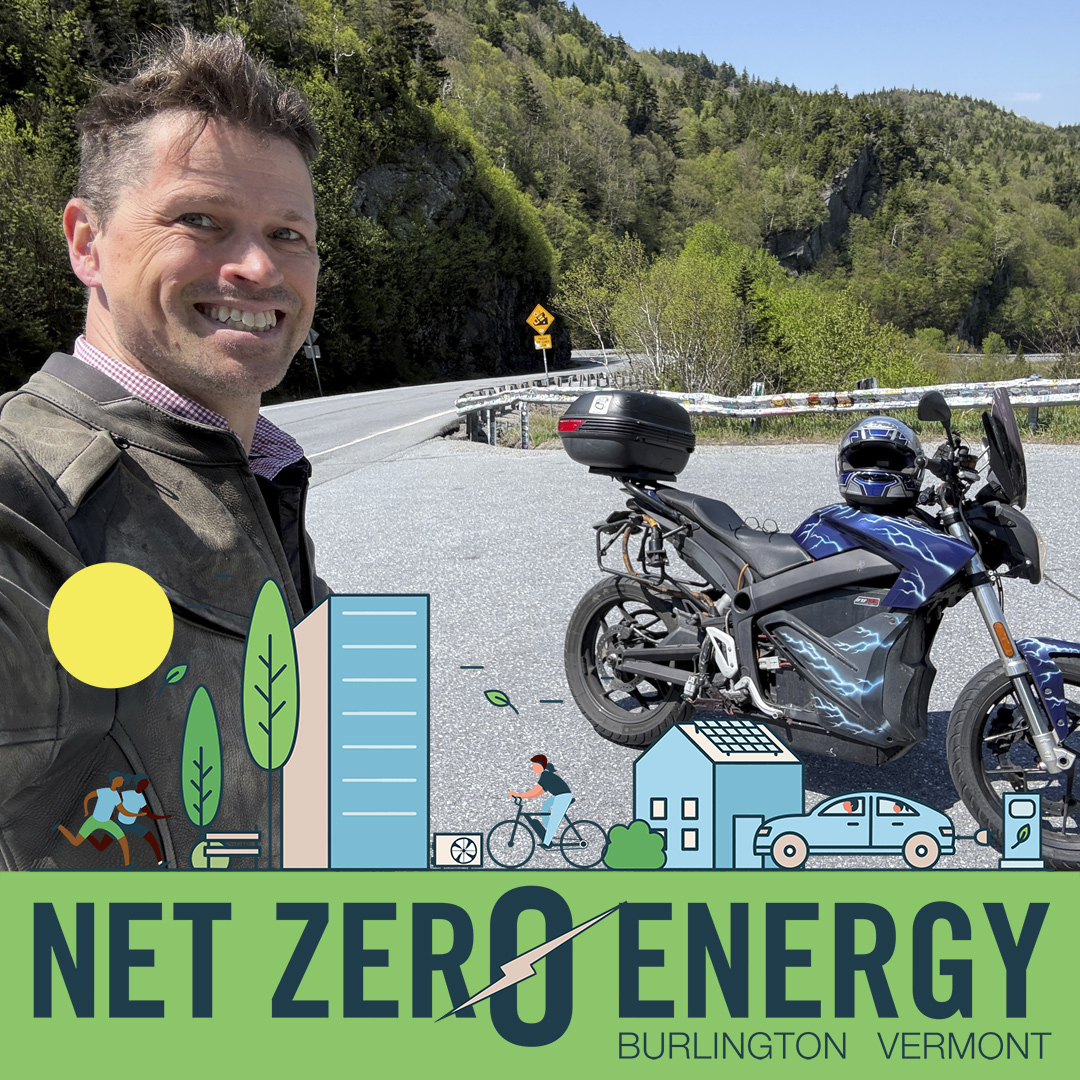
Ben Rich, Commercial Energy Advisor at VGS, shares his experiences taking long road trips on electric motorcycles. Discover how clean vehicle technology has evolved, from battery range improvements and versatile charging options to overcoming range anxiety. Ben dispels common myths regarding electric vehicles, highlights the advantages of quiet electric dirt bikes, and reflects on memorable human connections made while charging across the nation. Tune in to explore how adopting electric transit can advance our collective journey toward Net Zero Energy.

/
Ben Rich, Commercial Energy Advisor at VGS, shares his experiences taking long road trips on electric motorcycles. Discover how clean vehicle technology has evolved, from battery range improvements and versatile charging options to overcoming range anxiety. Ben dispels common myths regarding electric vehicles, highlights the advantages of quiet electric dirt bikes, and reflects on memorable human connections made while charging across the nation. Tune in to explore how adopting electric transit can advance our collective journey toward Net Zero Energy.
transcript
00:00 Jennifer Green: Hello, Burlington and welcome to Net Zero Energy. I’m Jennifer Green, director of sustainability for the City of Burlington, where our goal is to reduce and eventually eliminate fossil fuel usage. Today, we’re really happy that we’ve got Ben Rich with us. Ben is the commercial energy advisor at VGS, who’s been in Burlington since twenty twenty four. Coming to us with a background in teaching and physics in particular, but we’re really here not so much to talk about Ben’s work. Ben, you have some interesting motorcycle diary stories, if I understand correctly.
00:44 Ben Rich: Absolutely. Yeah. I’ve taken several cross-country trips on electric motorcycles in twenty thirteen through twenty seventeen across the country a bunch of times and collected a three countries along the way and all the lower forty eight states.
00:59 Jennifer Green: Before we get into the specifics of your trips, tell us about your bike, the specs on your bike.
00:01:04 Ben Rich: Yeah. So, well, I’ve always been a kind of a climate warrior, and I’ve wanted to get as close to zero emissions as possible in my personal life. And so way back in two thousand and eight, I got my first electric motorcycle. And so that one was a Vectrix. It went a grand total of forty miles. It went one hundred kilometres per hour, so sixty two miles an hour. So technically it could go on the highway for a short time. And then that got me off gas for that was my first vehicle that got me off gas. And then later in twenty twelve, I got a zero electric motorcycle. So it had nine kilowatt hour battery. It touted one hundred and twelve mile range, which I did manage to get one time by going twenty five miles an hour for like four and a half or five hours. But then I got a twenty fourteen zero S with a thirteen kilowatt hour battery that goes about one hundred and fifty miles on a charge. On roads, but then ninety miles on highways. And I got a third party charging system that gave me a full charge in an hour. And now I ride a twenty sixteen zero s R, and that has a fourteen point four kilowatt hour battery. One hundred and sixty miles of range with like one hundred miles on the highway. So like real, real riding at normal speeds. And I can charge that up in about forty five minutes.
02:29 Jennifer Green: And tell us about the charging, because of course, we talk about level one, level two, level three with with electric vehicles. Does that include does that work for bikes as well? Motorcycles.
02:38 Ben Rich: Yeah, totally. So zero’s all come with level one charging. So a regular plug. And on my first cross country trips, I literally went into the hotel room with my motorcycle and plugged it in next to the TV. And it was really wild, like how easy it was because when I went in the first time to ask a hotel owner, like, can I bring my motorcycle into my room? Right. That’s a ridiculous request. And the guy, like, didn’t even look up from his paperwork. He’s like, oh, yeah, sure. No problem. And so I was like, I’m gonna tiptoe away. So he doesn’t change his mind. But like a bunch of other people allowed me to do that too. So any where there is electricity, you can charge an electric motorcycle, electric car, electric bike or whatever. Yeah. Level two charging is what I use for my motorcycle. And I, at one point I had it set up where I could plug in two, two plugs, at the same time, or if I went to a fifty amp post at a RV park, those have enough juice where those would get me going in about forty five minutes. So really, it’s just about knowing how to find the power. And then, and then just plugging it in. And then level three charging is what I’d really like on my motorcycle because the motorcycle battery gets you a much further distance on the same amount of charge as an electric car. So you have a smaller battery and you can go pretty far with it.
04:07 Jennifer Green: Sure. So at home, what are you using? Do you have a level two?
04:09 Ben Rich: I do have a level.
04:10 Jennifer Green: two, so normally one could use that for a car. That would be, you know, for most folks they’re installing it for their car. You use it for your motorcycle, right? So if you were to go to level three, you’d be filling it up in no time, charging it up in no time.
04:22 Ben Rich: Yeah. Due to the overheating of the battery at high charging rates, they limit it. So you can’t use the full one hundred kilowatts, two hundred kilowatts, three hundred and fifty kilowatts at some stations, which would charge my bike in like, I don’t know. 20s. Right. It throttles it so that you charge up in about twenty five minutes. So I think that’s the fastest I’ve heard of an electric motorcycle.
04:48 Jennifer Green: We know a little bit now about charging about what you’ve been riding, how far you can go on a charge. Tell us about your adventures.
04:55 Ben Rich: Yeah. So on one fateful day in early twenty thirteen, I got a phone call from someone who said, do you want to go on a cross country electric vehicle road trip? We’ve got someone on an electric scooter. You’d be the electric motorcycle. We have an electric bicycle and an electric car. At that time, the Nissan Leaf was the only electric car. And, they’ll pay for all the hotel rooms. And I thought, that sounds fantastic. I was a teacher at the time. I taught physics and environmental science. And so I had time, not money. And so I, you know, what better way to spend your time than going on an epic road trip? So I did that in twenty thirteen. It was incredible. There’s a movie made about that that you can find on Vimeo called Kick Gas.
05:40 Jennifer Green: Okay.
05:40 Ben Rich: And so you have to say that kind of slowly and carefully because you don’t offend people. But Kick Gas is a great movie about, there were ten of us on this trip. And, you know, traversing the US back in twenty thirteen wasn’t a lot of charging infrastructure at that time. And my favorite part of that trip was we went on route sixty six, and route sixty six was the first time you could travel long distances using gas cars. There weren’t gas stations everywhere like there are now, and so it was really fitting to travel along route sixty six, being a an early adopter and doing these epic road trips on electric vehicles. We’re on the exact same route that people did them.
06:19 Jennifer Green: So you felt this connection to those early, early car drivers?
06:22 Ben Rich: Oh, totally. Totally. We met some amazing people there and visited some fascinating towns and it was great.
06:29 Jennifer Green: So how has that changed? So that was twenty thirteen. You’ve done more long distance travel on your motorcycle. How have things changed?
06:36 Ben Rich: Yeah. So twenty fourteen, I did a just a trip across the Midwest, went to like a cousin’s wedding, visited a bunch of friends. I’m a semi-professional swing dancer. And so I have a lot of friends across the country who swing dance. And so they would just put me up and I got to like, catch up with them after a decade or so. And so for me, these trips became about reconnecting with friends, but I, I made videos on YouTube. And you can find them either Ben rich electric biker or Ben Swing. And so I would just go and visit friends, but like I would publicize like electric vehicles are here. They’re cool. And I would say that they were easy. Now they are in twenty twenty six, it’s so easy to travel. And I take road trips in my electric car all the time. But in twenty thirteen, twenty fourteen, not so much infrastructure. So I really was like, you know, patching it together. Near population centers, there were EV charging stations, level two, level three, not that many level three, but I needed level two. And then where the fun roads are out in the mountains, there were RV parks I see. And so I would just pull up to an RV park and ask, can I charge up for an hour? And they would usually look at me kind of funny because normally you pull up in an RV park, you’re staying overnight. So they would, and a lot of them would say, okay, well, we need you to pay us for the electricity. And I’m like, absolutely. You know, knowing full well it would cost a dollar, maybe two, right. So at the end, and I actually just rewatched one of the videos I made about this and, and I, I was commenting on how the owner said, you know, like, go take a reading before, take a reading afterwards and let me know. So I was like, okay, one point three kilowatt hours at twelve point five cents per kilowatt hour is a buck fifty. And he absolutely said, you know, go on your merry way. A lot of them said the same phrase, which was funny. They all said, if a dollar is going to put me out of business, I’m in the wrong business. Right? So there was this pride of like, okay, you know, I’m, I’m, I’m happy to give this to you. And normally at that point, I would have had like this really interesting conversation with them. And, deep red states in the middle of the country and everyone is super fascinated when you have the motorcycle with you. And that’s another really interesting thing, like the online personas versus in person talking to people about electric vehicles or electric motorcycles. So my favorite road is the tail of the dragon in North Carolina, the mountains of North Carolina, Blue Ridge Parkway, that kind of thing. Just stunningly gorgeous. And online, if you say you ride an electric motorcycle, people are just like, that’s ridiculous. I don’t like it, blah, blah, blah. And then you show up at a place where there’s basically all Harley riders and sport bike riders, and you park your electric bike there and people, you know, these big bald dudes in leather jackets kind of walk up to your bike and they put their hand on their chin and they’re kind of like, that’s got a lot of torque, doesn’t it? You know, and so they’re used to associating power with sound because that’s how it always showed up. But now you don’t need that. And so that’s a real mind shift for a lot of people.
09:55 Jennifer Green: Ben. So tell us about you’ve written, I guess, an internal combustion engine, motorcycle or. No, I’m wondering about just performance and for how you can compare the two.
10:03 Ben Rich: Yeah. So I haven’t ridden them because I got into motorcycles to get off of gas and, but the torque is stronger and the horsepower is less. So you. Most electric motorcycles I’m familiar with like generally compare about to a six fifty cc. However, they can take an eleven hundred cc Hayabusa off the line, right? So an eleven hundred cc Hayabusa is a powerful bike. And so, because electric motors are simply better at torque, you get off the line quicker than they do now. They will pass you. But the, the immediate torque and of course, like when you’re in traffic or on street roads, when you’re not on a track, which is what most of us are on you. You want the quickness. You want the acceleration. You don’t need the top speed to be one hundred and fifty, one hundred and eighty, two hundred miles an hour. Two fifty like I’m not using that, but I sure do use that low end torque every single time I leave a stoplight. And so I get that like little fun rush of adrenaline for a moment.
11:13 Jennifer Green: Yeah. I mean, that’s like with my electric car, it’s just, it’s, it’s out of the gate, the speed out of the gate. But how are you preparing? Like you said, you, you can’t necessarily go anywhere. Sort of. Are you thinking about where are you going to be charging? Or do you set your destination? Then figure it out as you go along.
11:27 Ben Rich: The first trips I did, I definitely pre-planned a lot, not necessarily before the whole trip, but like as I went, I would know the next day where I planned to charge. But like I said, I was stopping in at RV parks. So like they could say no. And, and nobody actually said no. There were a couple that were full, so I couldn’t charge there. But in like twenty sixteen, twenty seventeen. I would just kind of go and hope for the best.
11:55 Jennifer Green: It all worked out. And tell us what you think about the trajectory of adoption. Where are we in the in the upswing?
12:02 Ben Rich: Well, with motorcycle culture is much stronger on the West Coast. So in California, there are a lot more motorcycles than there are here. And in Florida and the south, southeast, southwest, there’s there’s more sunny weather, so you can use it all year long. Whereas in Vermont, the moment there’s a sunny day in April, suddenly you remember there’s motorcycles, like they’re all over the place now because everyone’s just been dying to get right back on them. So their adoption is still kind of slow because there hasn’t been the DC fast charging, which the ability to take road trips is really important to a lot of people because some people use it for a daily commuter, but other people just want it to go ride for the whole weekend, and if you need to be concerned about charging, then that’s going to stop people from from using it. The charging infrastructure is really the big thing. Less so with motorcycles so far, but they’re fantastic as dirt bikes. And so I went around to some of the motorcycle shops in Vermont recently near Burlington and New Haven, and cycle wise and roadside powersports have dirt bikes. And the great thing about electric dirt bikes is that a lot of dirt bike tracks are in people’s backyards, and so their neighbors are going to get mad if they ride them late at night or or anytime their neighbor is home, right? They just don’t want to hear the brap Brap Brap. So you get an electric one. They can’t hear you, so you can ride any time you want. So there is greater adoption with dirt bikes and they’re fantastic. Like with a dirt bike, you also want a lot of torque.
13:49 Jennifer Green: I was just talking to a friend who was complaining about their neighbor leaving for work early in the morning on a motorcycle, and having to speak to their neighbor about how disruptive it was. So thinking about this paradigm shift to to quiet, I wonder if the culture is ready. Are we ready to embrace quiet motorcycles or does the the noise and the, like the zeitgeist of motorcycles? Is that will that be hard to break?
14:11 Ben Rich: Oh yeah. Oh yeah. It’s going to take some time. And it’s a big culture shift. So, somebody made t shirts that says loud pipes save lives. They don’t. The facts are opposite of that. So the main research that’s been done in motorcycle safety is the hurt report from the nineteen eighties. And they found that there were no changes in instances of any type of accident with loud motorcycles and quiet motorcycles. And so there there is no truth to loud pipes save lives. You also think about it, the pipe. What direction is the pipe facing? It’s facing backwards. So as you as a motorcyclist are coming up on a car, a lot of times they’ll cut you off because they don’t see you. You’re you’re loud pipes aren’t doing nothing there. And so, a lot of times it’s just people just want them and they use the safety as a, an inaccurate argument on their side. Additionally, I used to live near New York City and I rode my electric motorcycle into New York City all the time. And there was a safety benefit because I could hear the road noise of the tires of the cars right next to me. And so I knew exactly what was going on due to my ability to hear. And as a motorcyclist, I want my safety in my hands. I’m not trusting someone who’s on the cell phone, you know, distracted driving, in a, in a car that has soundproofing in it. And they’re blasting the radio, right? There are so many things that are just going to cause people to just not hear you. So don’t pretend that you’re putting your safety in someone else’s hands because they can hear you. It’s not happening. But if you can hear them now, you’re genuinely safe.
15:54 Jennifer Green: So of course, we need to name this podcast episode Motorcycle Diaries. And it would be wrong, Ben, if we didn’t ask you for some of those diary worthy experiences. Do you want to share? Great experience. Bad experience, good road, bad road.
16:08 Ben Rich: Yeah. Happy to. So my, my favorite road is the Blue Ridge Parkway. I love skyline Drive through Virginia and then the Blue Ridge Parkway through the Blue Ridge Mountains in North Carolina is just beautiful. So if you love road trips and you love riding or driving, like that’s my favorite road. The Pacific Coastal Highway is a very close second. Don’t get me wrong, PCH is amazing. And then, my favorite road is the tail of the dragon in North Carolina, which is eleven miles long and has three hundred and eighteen turns. It’s absolutely a roller coaster of a road. And, so that’s a blast. My least favorite roads. I-10 in like Louisiana and Texas and I-95. The closest times I came to having an accident was like in Washington, DC, where people were just changing lanes. No blinkers, not looking anywhere, distracted driving. Fortunately, I did not get in an accident, but highways are not where I want to be. I want to be on the side roads, which makes Vermont riding amazing. When I moved here, I just started looking up like what a good motorcycle roads. And here I am on my computer and time is going and going and I’m like, why am I burning sunlight on my computer? Like, I bet there’s lots of good roads in Vermont. And I was right. Every road that I that I rode on was just like phenomenal. So riding through the back roads up to Saint Albans or down to Middlebury or down the one hundred or up to the Northeast Kingdom, like all of those. There’s just so much great riding. One of my favorite charging stories was at a at an RV park, which was full. And there were a lot of people who who kind of lived there every summer. And so when I was at the office asking if I could charge, they said, you know, we can’t do it. So but then they said, well, wait a minute. Let me let me call my friend. Let’s call her Nancy. I can’t remember her name anymore. But like, so they call her up and she says, sure, have them come charge. And so I roll up and it’s this woman, she’s a grandmother. She’s watching a toddler, her granddaughter, who’s sleeping. And she said, listen, we can unplug the RV and turn off the air conditioning, but it’s a hot day. And if the baby starts crying, we need to plug in the RV again. And I, I’m like, absolutely. I just need to be able to make it to another RV park where I can charge. So we plug in and then we start chatting and I just have like a lovely time, half an hour or something like that, chat it up. And maybe it was forty five minutes. It was like I got a full charge. No worries about the baby. The baby was fine. and we had this lovely time. But then as I’m going to unplug, she says, my husband would have loved this because he was a big motorcycle and like, I just wanted to let you charge because he passed away of cancer a few months ago. And I was just like, I’m about to cry into my helmet. And I was just like, you’re so kind and thoughtful and nice and like this. I’m going to remember this moment forever. So they were really touching, poignant moments like that along the road as well.
19:14 Jennifer Green: Ben, this has been a really fun conversation. I’m really inspired and so appreciate you sharing your stories with us. Thanks for yeah, thanks for the visit.
19:22 Ben Rich: Thanks for having me.
19:24 Jennifer Green: Thank you again for listening to Net Zero Energy from Burlington Electric Department. If you have any questions about this show or what bed offers regarding rebates or technical support, look for us at burlingtonelectric.com or call us at 802-865-7300. We’re here to help you on our mutual path to Net Zero Energy.